
What Is PU Foam? A Complete Guide from a Foam Manufacturer
PU foam, or polyurethane foam, is a versatile cushioning material widely used in mattresses, furniture, automotive seating, packaging, and other comfort applications. In mattress manufacturing, PU foam can be engineered with different densities, hardness levels, and performance characteristics to serve different comfort and support requirements.But not all PU foam is the same.The quality, density, resilience, formulation, manufacturing process, and intended application of the foam can significantly influence how it performs.For mattress buyers, understanding PU foam provides a valuable look beneath the fabric and quilting of the finished product.For Safari Mattresses, this subject is particularly relevant. Safari is part of the Shakti Foams family, bringing together mattress development with more than 25 years of experience in foam and comfort-product manufacturing.So, what exactly is PU foam? How is it manufactured? Why is it used in mattresses? And what separates quality foam from lower-quality alternatives?Here is a detailed guide from a manufacturing perspective.
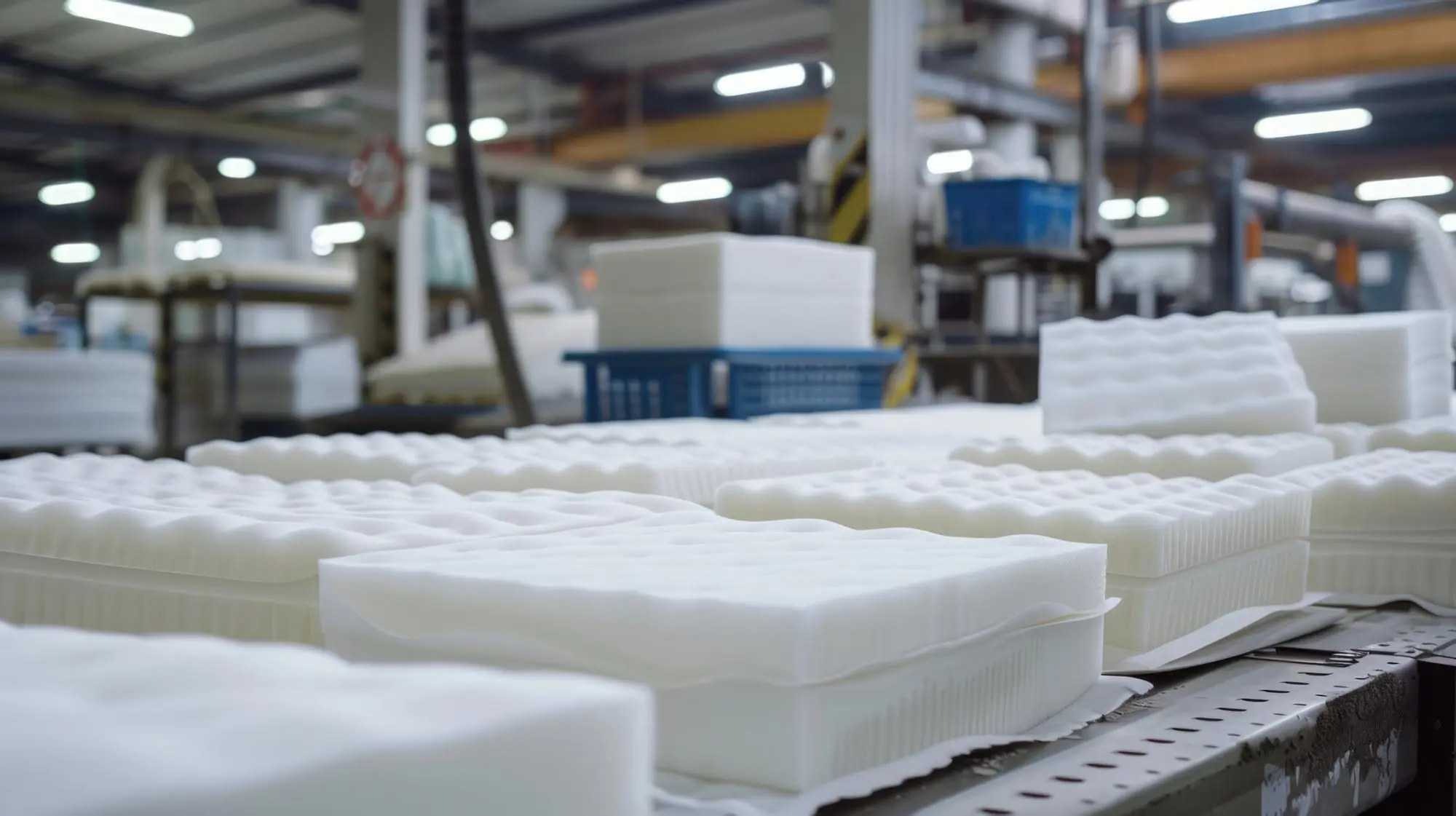
What Is PU Foam?
PU foam stands for polyurethane foam.
It is a polymer-based material created through a controlled chemical reaction between specific raw materials. Depending on the formulation and manufacturing process, polyurethane foam can be produced with different physical properties.
This means PU foam is not one single type of foam.
It can be engineered for different:
- Densities
- Hardness levels
- Resilience characteristics
- Comfort requirements
- Support requirements
- Industrial applications
This versatility is one of the primary reasons polyurethane foam is widely used across multiple industries.
At Shakti Foams, the manufacturing portfolio includes PU foam alongside HR foam, memory foam, peeling foam, fire-retardant foam, mattresses, pillows, sofa cushions, and other comfort products.
Why Is PU Foam Used in Mattresses?
A mattress needs to perform several functions simultaneously.
It should provide comfort while supporting the body. It should respond to pressure while maintaining its structure. It should also be suitable for regular use over an extended period.
PU foam can be manufactured with different characteristics to perform different functions within a mattress.
Depending on the mattress design, foam may contribute to:
- Surface comfort
- Cushioning
- Support
- Pressure distribution
- Transition between mattress layers
- Structural stability
However, the presence of PU foam alone does not determine mattress quality.
The type of foam, density, hardness, resilience, construction, and interaction with other mattress materials all matter.
This is why understanding how a quality mattress is built layer by layer is important when comparing mattress products.
Is All PU Foam the Same?
No.
This is one of the most important things mattress buyers should understand.
Two products can both contain polyurethane foam while offering very different performance characteristics.
Differences can exist in:
- Density
- Hardness
- Resilience
- Cell structure
- Raw material formulation
- Manufacturing consistency
- Intended application
This is similar to many other manufactured materials.
Simply knowing the name of the material does not tell you everything about its quality or performance.
The way the material is formulated, manufactured, tested, and used within the final product also matters.
How Is PU Foam Manufactured?
Polyurethane foam manufacturing involves a controlled reaction between chemical components.
The precise formulation and manufacturing conditions influence the characteristics of the finished foam.
Factors that may be controlled during manufacturing include:
- Raw material ratios
- Temperature
- Chemical formulation
- Mixing
- Reaction conditions
- Curing
- Production technology
The objective is to manufacture foam with characteristics suited to its intended application.
For mattress manufacturers, consistency is particularly important.
A mattress model should provide the comfort and support characteristics it was designed to deliver across production batches.
According to the Safari Mattresses company story, Shakti Foams’ manufacturing journey has evolved from box-foaming machinery to the use of a Hennecke High-Pressure Foaming Machine from Germany.
This manufacturing background forms an important part of the expertise behind Safari Mattresses.
What Does Foam Density Mean?
Density is one of the most frequently discussed foam specifications.
In simple terms, foam density describes the amount of material present within a given volume of foam.
However, density is often misunderstood.
A higher-density foam is not automatically harder.
A lower-density foam is not automatically softer.
Density and firmness are different characteristics.
Density can influence factors such as:
- Material structure
- Durability
- Shape retention
- Long-term performance
Firmness, on the other hand, relates to how soft or hard the foam feels under pressure.
Our detailed guide on why mattress density matters more than most buyers realise explains this important mattress specification in greater detail.
PU Foam Density vs Firmness: What Is the Difference?
This is where many mattress buyers become confused.
Consider two foam samples.
Both could have a similar density but feel different when pressure is applied.
Alternatively, two foams could feel similarly firm while having different densities.
Why?
Because density and firmness measure different properties.
Density refers to the amount of material within the foam.
Firmness refers to the resistance you feel when pressure is applied.
Mattress manufacturers consider multiple foam characteristics when developing products rather than selecting materials based on a single specification.
This is also why buyers should avoid choosing a mattress based only on whether it is described as soft, medium, or firm.
You can understand this further in our guide to choosing between a soft, medium, or firm mattress.
What Is Foam Resilience?
Resilience describes how foam responds after being compressed.
In simple terms, it relates to how effectively and quickly the material returns towards its original shape after pressure is removed.
Different foam types can have different resilience characteristics.
This can influence:
- Responsiveness
- Comfort
- Movement
- Support
- Long-term performance
For mattress manufacturing, understanding resilience is important because foam is repeatedly compressed throughout its usable life.
Every time someone sits, sleeps, turns, or moves on a mattress, the materials respond to pressure.
The ability of those materials to perform consistently over time is an important part of mattress design.
What Makes High-Quality PU Foam Different?
There is no single specification that determines foam quality.
Instead, manufacturers may consider multiple factors, including:
- Raw material selection
- Manufacturing process
- Density
- Hardness
- Resilience
- Consistency
- Intended application
- Quality control
The right foam also depends on how it will be used.
A foam developed for a sofa cushion may have different requirements from foam intended for a mattress support layer.
Similarly, different mattress designs may require different combinations of materials.
This is why material knowledge is so important in mattress manufacturing.
How Does Foam Manufacturing Expertise Influence Mattress Quality?
A mattress brand needs to understand more than the finished product.
It needs to understand what happens underneath the surface.
Foam manufacturing knowledge can help manufacturers evaluate:
- Material characteristics
- Density requirements
- Firmness requirements
- Resilience
- Layer compatibility
- Product consistency
Safari Mattresses brings this connection between foam manufacturing knowledge and finished mattress development through its relationship with Shakti Foams.
As explored in the story behind Safari Mattresses and Shakti Foams, the brand’s mattress journey is connected to more than 25 years of foam and comfort-product manufacturing expertise.
Is PU Foam the Same as Memory Foam?
No.
Although memory foam is part of the wider polyurethane foam family, it is formulated to provide different performance characteristics.
Memory foam is commonly associated with:
- Body contouring
- Pressure response
- Reduced motion transfer
- A slower response to compression
Other PU foams may be developed for different levels of cushioning, firmness, resilience, and support.
This is why simply seeing the word “foam” in a mattress specification does not provide enough information to understand how the mattress will feel or perform.
Is PU Foam the Same as HR Foam?
No.
HR stands for High Resilience.
HR foam is designed to provide different resilience and support characteristics compared with conventional polyurethane foam.
It is commonly used where responsive support and durability are important considerations.
We will explore this topic in detail in our next guide:
PU Foam vs HR Foam: What Is the Difference?
Understanding these distinctions helps buyers move beyond generic terms such as “foam mattress” and evaluate what materials are actually being used inside a product.
How Is PU Foam Used Inside a Mattress?
The exact application depends on the mattress design.
PU foam may be used in:
- Comfort layers
- Transition layers
- Support layers
- Base layers
- Quilting applications
A mattress can also combine different types of foam and other materials to create a particular comfort and support profile.
This is why mattress thickness alone does not reveal the complete story.
An 8-inch mattress with thoughtfully selected materials and construction may perform very differently from another mattress of the same thickness.
Our guide to whether a thicker mattress actually means better comfort explains why internal construction deserves more attention than height alone.
How Does Safari Mattresses Use Manufacturing Knowledge?
Different mattresses are developed for different comfort and support requirements.
For example, the Safari Ortho Latex Mattress and Safari Ortho Divine Mattress represent different approaches to mattress materials and construction.
The objective is not to use one material for every product.
It is to understand how different materials can work together to create different mattress characteristics.
This is where a background in foam manufacturing becomes particularly relevant.
Why Should Mattress Buyers Understand PU Foam?
Most customers do not need to become foam engineers before buying a mattress.
But understanding a few basic concepts can lead to better questions.
Instead of asking only:
“How thick is this mattress?”
Buyers can also ask:
- What materials are inside?
- What type of foam is used?
- How is the mattress constructed?
- What does the density specification mean?
- How do the layers work together?
- Who manufactures the mattress?
These questions provide a much clearer picture of the product.
Our guide on what questions you should ask before buying a mattress provides a practical framework for making a more informed decision.
Explore Mattresses Backed by Manufacturing Expertise
A finished mattress may look simple from the outside.
Inside, however, its performance depends on materials, layers, construction, and manufacturing decisions.
Safari Mattresses combines its consumer mattress range with the manufacturing background and foam expertise of Shakti Foams.
You can explore the complete Safari Mattress Collection to compare products designed around different materials, comfort preferences, and support requirements.
Final Thoughts
PU foam is one of the most versatile materials used in modern comfort products and mattress manufacturing.
But understanding PU foam requires looking beyond the name itself.
Density, firmness, resilience, manufacturing consistency, formulation, intended application, and overall mattress construction all influence how the material performs.
For Safari Mattresses, the connection to Shakti Foams provides a valuable manufacturing foundation built on more than 25 years of foam and comfort-product experience.
And for mattress buyers, understanding the materials beneath the surface can make it easier to distinguish between marketing claims and the factors that actually contribute to mattress construction and performance.
FAQs
What is PU foam?
PU foam, or polyurethane foam, is a polymer-based cushioning material that can be manufactured with different densities, hardness levels, resilience characteristics, and performance properties for mattresses, furniture, automotive seating, and other applications.
Is PU foam good for mattresses?
PU foam is widely used in mattress manufacturing. Its suitability depends on factors such as foam quality, density, firmness, resilience, intended application, and the overall construction of the mattress.
Is PU foam the same as memory foam?
No. Memory foam belongs to the wider polyurethane foam family but is formulated to provide specific characteristics such as body contouring and a slower response to pressure.
What is the difference between PU foam density and firmness?
Density refers to the amount of material contained within a given volume of foam, while firmness refers to how soft or hard the foam feels when pressure is applied.
What types of foam does Shakti Foams manufacture?
According to the official Shakti Foams website, its product portfolio includes PU foam, memory foam, HR foam, peeling foam, and fire-retardant foam.
Why does foam manufacturing experience matter for a mattress brand?
Foam manufacturing knowledge can help a mattress manufacturer better understand material properties, density, firmness, resilience, product consistency, and how different materials can be combined within mattress constructions.
Is Safari Mattresses connected to Shakti Foams?
Yes. Safari Mattresses is part of the Shakti Foams family and is backed by more than 25 years of foam and comfort-product manufacturing experience.
.jpg)
Faqs
Safari focuses on mattress construction, support systems, durability, and multiple comfort options designed for different sleeping preferences.
Yes. Safari offers orthopedic mattress options including the Ortho Latex and Ortho Divine models.
Yes. Safari offers multiple mattress types, including dual-comfort options that accommodate different sleeping preferences.
Safari mattresses are designed with durability and long-term support in mind, helping maintain comfort and performance over years of everyday use.
Yes. Comfort layers, support layers, and base layers work together to create the overall sleeping experience.


