
Best Mattress for Kids in Delhi: How to Choose the Right Mattress for Children and Teenagers
Choosing a mattress for a child is not simply about buying a smaller version of an adult mattress.Children and teenagers spend a significant amount of time sleeping, and their requirements can change as they grow. A mattress needs to provide comfortable support, allow easy movement and remain suitable as the child moves from one stage of growth to another.For families in Delhi, there is another factor to consider: the mattress needs to remain comfortable across very hot summers, monsoon humidity and colder winter months.So, what is the best mattress for kids in Delhi?There is no single mattress that is perfect for every child. The right choice depends on the child's age, sleeping position, body size, comfort preference, bedroom environment and how long you expect the mattress to be used.Safari Mattresses offers different mattress constructions for different sleeping requirements, including the Spring Bounce Mattress, which is designed around responsive comfort, support and movement.This guide explains what Delhi parents should consider before buying a mattress for children and teenagers and how to evaluate whether a particular mattress is suitable for a growing sleeper.
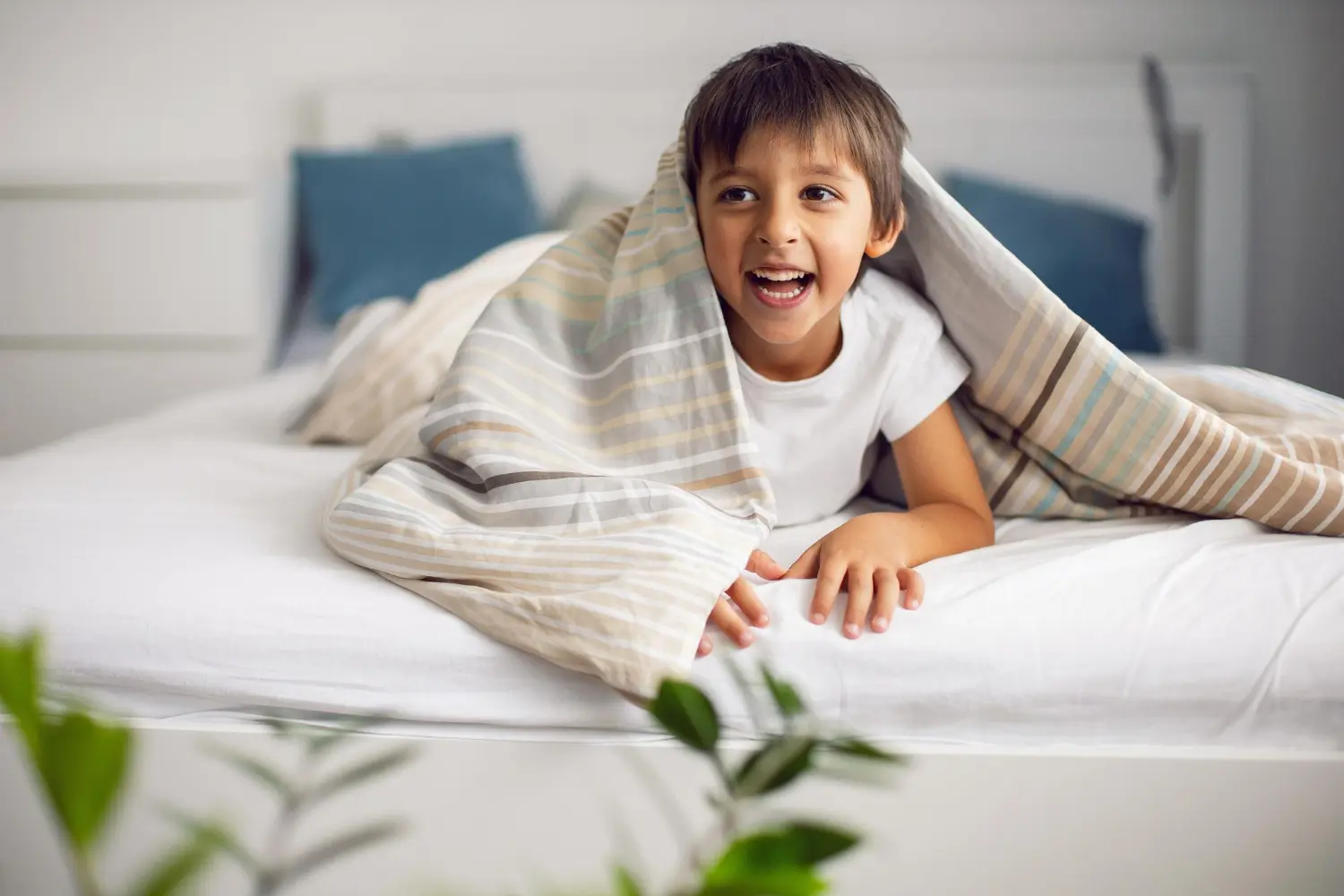
Why Choosing the Right Mattress Matters for Children
Children can spend many hours in bed every day.
Unlike adults, however, their sleeping requirements can change relatively quickly as they grow.
A mattress purchased for a young child may eventually be used by a teenager, meaning parents should think beyond the immediate comfort of the child.
A suitable mattress should ideally provide:
- Comfortable support
- Appropriate firmness
- Good pressure distribution
- Easy movement
- Adequate breathability
- A durable construction
- A suitable sleeping surface for the child's age and size
The mattress should also work with the child's existing bed frame and bedroom environment.
Safari's mattress buying guide for Delhi families explains why the sleeper's age, sleeping habits and individual requirements should be considered when selecting a mattress.
What Should Parents Look for in a Kids' Mattress?
There are several factors worth considering before making a purchase.
Appropriate Support
A children's mattress should provide a stable sleeping surface without feeling unnecessarily hard.
Support becomes particularly important as children grow and their sleeping habits change.
Instead of choosing a mattress simply because it is labelled “firm,” parents should consider the complete construction and how the mattress feels when the child lies on it.
Comfortable Cushioning
Children may move frequently while sleeping, so the mattress should provide sufficient cushioning without creating an excessively sinking sensation.
The upper comfort layers can influence how the mattress feels when the child lies down.
A well-designed construction can balance cushioning with support rather than relying entirely on a soft surface.
Easy Movement
Children frequently change sleeping positions during the night.
A mattress that responds appropriately to movement can make it easier to turn, sit up and change positions.
This is one reason responsive mattress constructions can be worth considering for younger sleepers.
Breathability
Delhi's summer temperatures can make sleeping uncomfortable, particularly in bedrooms without consistent air conditioning.
Mattress materials and construction can influence how warm the sleeping surface feels.
Parents should therefore consider breathability alongside firmness and comfort.
Safari's guide to how India's climate can influence mattress selection explains why climate should be considered when choosing mattress materials.
What Is the Best Mattress Firmness for Children?
There is no universal firmness level that every child needs.
A common mistake is assuming that a child's mattress should automatically be very firm.
Another mistake is assuming that a very soft mattress will always provide better comfort.
The better approach is to consider the child's size, sleeping position and personal comfort.
For Children Who Sleep on Their Back
A supportive surface can help provide a stable sleeping experience.
A mattress that is neither excessively soft nor unnecessarily hard may be suitable, depending on the individual child.
For Side Sleepers
Children who regularly sleep on their side may prefer some cushioning around areas that come into contact with the mattress.
A very hard sleeping surface may feel uncomfortable.
For Children Who Change Positions Frequently
A responsive mattress can make movement easier.
This is particularly relevant for active sleepers who move between their back, side and stomach during the night.
Safari's guide to soft, medium and firm mattress choices provides a broader explanation of why firmness should be matched to the sleeper rather than treated as a universal quality indicator.
Should Children Sleep on a Firm Mattress?
Firmness and support should not be confused.
A mattress can provide support without necessarily feeling extremely hard.
The goal is to find a mattress that offers a stable foundation while remaining comfortable enough for the child.
Parents should therefore avoid choosing a mattress solely because it is advertised as “extra firm.”
Instead, consider:
- Mattress construction
- Foam or spring type
- Comfort layers
- Overall firmness
- Child's sleeping position
- Child's comfort preference
This approach is also useful when children grow into teenagers and their mattress requirements begin to resemble those of adults.
Mattress for Children vs Mattress for Teenagers
Age can influence the buying decision, but it should not be the only factor.
Mattress for Younger Children
For younger children, parents may prioritise:
- Comfortable cushioning
- Support
- Breathability
- Easy maintenance
- Durability
- Appropriate mattress size
Mattress for Teenagers
Teenagers may have more specific preferences.
They may spend more time studying, using their beds for relaxation or sleeping longer hours.
Their body size and sleeping habits may also be closer to those of adults.
Therefore, parents may want to choose a mattress that can continue to provide appropriate support as the teenager grows.
This makes the construction and durability of the mattress particularly important.
Why a Mattress for Growing Children Should Be Chosen Carefully
A child's mattress can remain in use for several years.
This means parents should think about how the mattress will perform as the child grows.
A mattress that feels appropriate for a smaller child may feel different when the sleeper becomes taller or heavier.
This doesn't mean parents need to buy the most expensive mattress available.
Instead, look for a construction that provides an appropriate balance of comfort, support and durability for the expected period of use.
Safari's article on what makes a high-quality mattress explains why materials and construction matter when evaluating mattress quality.
Why Spring Bounce Can Be an Option for Children and Teenagers
Safari's Spring Bounce Mattress is particularly relevant to families looking for a responsive mattress for younger sleepers.
The mattress combines a spring-based construction with foam and quilting to create a supportive yet responsive sleeping surface.
The product is designed around:
- Responsive support
- Bounce
- Movement
- Comfort
- Pressure distribution
- Breathability
The spring construction can provide a different feel from a deeply contouring memory foam mattress.
For children and teenagers who move frequently during sleep or prefer a more responsive surface, this type of construction can be worth considering.
You can explore the Safari Spring Bounce Mattress to see its construction and specifications.
Why a Responsive Mattress Can Be Useful for Active Sleepers
Some children are restless sleepers.
They may turn frequently, change positions or move around during the night.
A highly responsive mattress can make these movements feel more natural than a surface that allows the sleeper to sink deeply into the comfort layers.
This doesn't mean every child needs a spring mattress.
It simply means that responsiveness is one of the characteristics parents can consider when comparing mattress constructions.
Safari's Spring Bounce uses a spring-based design combined with foam layers to provide this type of responsive sleeping experience.
Spring Mattress vs Foam Mattress for Children
Both can be suitable, depending on the construction.
Foam Mattress
Foam mattresses can provide cushioning and support through different foam layers.
Memory foam, PU foam, HR foam and rebonded foam can each provide different characteristics.
Safari explains the basics of PU foam and its role in mattress construction.
Spring Mattress
Spring mattresses can provide a more responsive feel.
They can be useful for sleepers who prefer a surface that responds quickly to movement.
Safari's Spring Bounce combines spring support with foam layers rather than relying on springs alone.
The right choice therefore depends on the child's preferred sleeping experience and the mattress construction.
Does Delhi's Climate Affect a Child's Mattress Choice?
Yes.
Delhi experiences significant seasonal changes.
Summer can bring very high temperatures, while winter can be substantially colder.
Children who sleep hot may therefore benefit from a mattress construction that offers good airflow and doesn't create an unnecessarily warm sleeping surface.
Parents should also consider whether the child's room has:
- Air conditioning
- Ceiling fans
- Cross ventilation
- Natural airflow
- Consistent temperature control
A mattress that works comfortably in an air-conditioned bedroom may feel different in a naturally ventilated room during peak summer.
Safari's guide to mattresses for AC and non-AC rooms explores this issue in more detail.
Is Memory Foam Good for Children?
Memory foam can provide a contouring and pressure-relieving feel.
However, whether it is suitable depends on the child's preference and the specific mattress construction.
Some children may enjoy the body-contouring sensation, while others may prefer a more responsive surface that makes movement easier.
For parents considering memory foam, Safari's Visco Tech Mattress combines memory foam with PU foam and rebonded foam.
Safari's Visco Magic Mattress offers another memory-foam-based construction focused on contouring comfort and reduced motion transfer.
These products are useful examples of why “memory foam” alone doesn't describe the complete mattress experience.
What Mattress Size Should You Buy for a Child?
The correct size depends on the child's age, available bedroom space and how long you want the mattress to remain useful.
A smaller mattress may be suitable for a young child, but parents may prefer a larger size if they want the mattress to continue being used as the child grows.
Before purchasing, consider:
- Current height of the child
- Expected period of use
- Bedroom space
- Existing bed frame
- Whether the child will eventually use the mattress as a teenager
Safari's complete mattress collection includes different mattress sizes and constructions, allowing parents to compare options according to the bed and sleeper.
Does Mattress Thickness Matter for Children?
Thickness is worth considering, but more thickness doesn't automatically mean a better mattress.
The internal construction matters more than the height alone.
Two mattresses with the same thickness can use completely different materials and provide very different levels of support and comfort.
Safari's guide to why mattresses with the same thickness can feel completely different explains this distinction.
Parents should therefore compare the complete construction rather than selecting a mattress simply because it is thicker.
How Important Is Mattress Durability for Children?
Children can be demanding on mattresses.
Jumping, playing, sitting and spending time on the bed can place different types of stress on the mattress compared with normal sleeping.
While a mattress should primarily be used for sleeping, parents may want to consider durability when choosing a mattress for a child's room.
Look at:
- Material quality
- Construction
- Foam characteristics
- Spring system, if applicable
- Manufacturing quality
- Expected usage
A mattress that maintains its intended support and comfort over time can offer better value than one selected solely for its initial feel.
Should You Buy a Mattress Specifically for a Child?
Not necessarily.
For younger children, a mattress designed around their current requirements may make sense.
But if the mattress is expected to remain in use through adolescence, parents should also consider the child's future needs.
A mattress that can comfortably accommodate a growing sleeper may provide greater practical value.
This is particularly important when purchasing a larger mattress for a child's bedroom.
How to Choose a Mattress for a Teenager in Delhi
Teenagers can have significantly different requirements from younger children.
Consider:
Sleeping Position
Does the teenager primarily sleep on their back, side or stomach?
Firmness Preference
Does the teenager prefer a softer, medium or firmer surface?
Body Size
A growing teenager may need a mattress that provides sufficient support as their body changes.
Movement
If the teenager frequently changes position while sleeping, responsiveness may be important.
Temperature
Delhi's summer conditions can make breathable construction valuable.
Future Use
If you are buying a larger mattress, consider whether it can remain suitable as the teenager becomes an adult.
Common Mistakes Parents Make When Buying a Kids' Mattress
Choosing the Hardest Mattress
Harder doesn't automatically mean better support.
Buying Only Based on Price
A low price doesn't tell you whether the construction is appropriate.
Ignoring the Child's Sleeping Position
The mattress should match the sleeper, not just their age.
Choosing Only by Thickness
Thickness doesn't automatically indicate mattress quality.
Ignoring Delhi Summers
Temperature comfort can become an important factor during hot weather.
Buying a Mattress That the Child Will Quickly Outgrow
Consider how long you expect the mattress to remain in use.
Choosing a Mattress Without Understanding Its Construction
Look beyond the outer fabric and understand what materials and support systems are inside.
Safari's guide to mattress construction explains why the internal structure can be more important than surface-level marketing claims.
A Parent's Checklist Before Buying a Kids' Mattress in Delhi
Before making a purchase, ask the following questions.
Does the mattress provide appropriate support?
Avoid assuming that the firmest option is automatically the best.
Is it comfortable for the child's sleeping position?
Consider how the child actually sleeps.
Is it responsive enough for the child?
Active sleepers may prefer a mattress that responds easily to movement.
Is the mattress suitable for Delhi's climate?
Consider summer temperature, ventilation and air conditioning.
Is the size appropriate?
Make sure the mattress fits the existing or planned bed frame.
Can the mattress remain useful as the child grows?
Think beyond the child's current age.
Is the construction clearly explained?
Look at the materials and layers rather than relying only on marketing terminology.
Does the manufacturer provide product specifications?
Transparent information can make comparison easier.
Why Mattress Construction Matters More Than the Label
Terms such as “kids mattress,” “orthopedic mattress,” “foam mattress” and “spring mattress” can help you understand what category a product belongs to.
But they don't tell you everything.
Two mattresses in the same category can have completely different internal constructions.
For parents, this means the buying decision should include a closer look at:
- Materials
- Support layers
- Comfort layers
- Firmness
- Responsiveness
- Breathability
- Mattress thickness
- Manufacturing quality
Safari's experience in foam and mattress manufacturing provides a useful example of this layered approach.
The company has been manufacturing mattresses since 1999 and is backed by Shakti Foams, which has a long history of foam manufacturing.
You can learn more about this background in the story behind Safari Mattresses and Shakti Foams.
Frequently Asked Questions
What is the best mattress for kids in Delhi?
The best mattress depends on the child's age, sleeping position, body size, firmness preference and bedroom environment. A responsive and supportive construction such as Safari's Spring Bounce can be considered for children and teenagers who prefer a more responsive sleeping surface.
Is a firm mattress better for children?
Not necessarily. Children need appropriate support, but a mattress doesn't have to be extremely firm to provide support. Comfort and sleeping position should also be considered.
Is a spring mattress good for kids?
A well-designed spring mattress can be suitable for children and teenagers. Spring-based constructions can provide a responsive feel that may be useful for active sleepers.
Is memory foam suitable for teenagers?
Memory foam can be suitable for teenagers who prefer contouring comfort and pressure relief. However, some teenagers may prefer the more responsive feel of a spring or latex-based mattress.
Is Spring Bounce suitable for children?
Safari's Spring Bounce is designed around responsive comfort and support and is an option parents can consider for children and teenagers. The mattress combines spring and foam construction for a responsive sleeping experience.
Should I buy a mattress that my child can use until adulthood?
It can be practical to choose a mattress that remains suitable as the child grows, particularly if you are investing in a larger mattress. However, the mattress should still be appropriate for the child's current comfort requirements.
Does Delhi's heat affect which mattress I should buy for my child?
It can. Delhi's hot summers make breathability and bedroom ventilation relevant considerations when choosing a mattress.
Does a thicker mattress mean it is better for children?
No. Mattress thickness alone does not determine quality or suitability. Materials, construction and support are also important.
How do I choose between a foam and spring mattress for my child?
Consider the sleeping experience your child prefers. Foam can provide cushioning and contouring, while springs can provide a more responsive feel. The construction of the individual mattress matters more than the category name alone.
Final Takeaway
Choosing a mattress for a child in Delhi requires looking beyond age and mattress size.
Parents should consider support, comfort, firmness, responsiveness, breathability, durability and the child's sleeping habits.
For younger children and teenagers who prefer a responsive sleeping surface, Safari's Spring Bounce Mattress is one option worth exploring because of its spring-and-foam construction.
For children who prefer a more contouring experience, Safari's Visco Tech and Visco Magic offer memory-foam-based alternatives.
The most important thing is not to choose a mattress simply because it is marketed as a “kids mattress.” Look at the actual construction and consider how the mattress will suit the child today and as they grow.
For Delhi families comparing different options, explore Safari's complete range of mattresses and choose based on the sleeper's individual requirements, bedroom environment and preferred comfort level.
A good children's mattress should do more than fit the bed frame. It should provide a comfortable, supportive and practical sleeping surface that can keep up with a growing sleeper.


